
Turn your qualitative customer data into a strategic asset.
Power genuinely customer-centered marketing, sales, and product decisions with a living, machine-readable knowledge base – your single source of truth.
Qualitative data - your most underutilized asset
Do you experience any of the following?
- Qualitative data is not easily available to support every-day decision-making.
- Research data is costly relative to the actual business value created.
- Teams spend significant time extracting insights and preparing reports.
- Insights are hard to query, combine, and analyze for patterns—leaving interpretation vulnerable to human bias.
- Qualitative insights can’t be instantly accessed or pulled to power GenAI and other applications.
Most companies don’t realize it, but they are sitting on a goldmine they can’t access.
Unlock strategic insight with a Knowledge Graph and AI
By combining human expertise, AI reasoning, and a connected knowledge graph built from your qualitative customer data, you unlock a new way of working with facts, not assumptions.
Here is what you can achieve by extracting the right data for each task.
1. Win More Customers
Uncover the real triggers and motivations that move people into action, the jobs they are trying to get done, and the solutions they actually choose.
2. Retain Customers
Bring to light the pains, constraints, and weak touchpoints that cause churn — and identify which solutions remove them.
3. Sell More to Existing Customers
Detect which solutions customers tend to buy together and the additional gains or outcomes they are seeking.
4. Lower Cost to Serve
Trace where customer effort and support costs are unnecessarily high and link them to solutions that simplify or automate.
5. Accelerate Technology Transformation
Reveal which habits and constraints block the adoption of new technologies, and which enablers create real progress.
Talk to your data, act on the insights
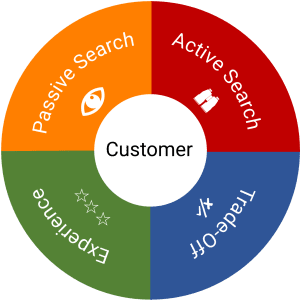
With your graph-based customer intelligence, you can chat directly with your data—just like talking to a colleague. Instead of digging through reports, you simply ask in plain language: “What product features resonate most with customers?” or “What pains most often block progress in Active Search?” Power virtually any kind of output—from marketing strategies, messaging, and campaign ideas to product and service design.
Data Analysis Use Cases

Discover Causality
Reveal the hidden cause-and-effect relationships behind customer choices to understand why they buy—or don’t

Recognize Patterns
Detect recurring themes, signals, and dependencies in customer behavior that traditional analysis misses.

Analyze Customer Journeys
Map the entire customer journey to see where progress stalls, what drives momentum, and where to intervene.
Development Use Cases

App Development
Use the data to feed your prototyping projects.

Marketing Strategy
Create persona cards that create empathy with your colleagues.

Hyper-Customization
Quickly create persona maps that create empathy.
What is a Knowledge Graph for qualitative data?
A knowledge graph is a database hat uses a graph-structured data model to represent and operate on data. It is the right way to store qualitative customer data because it doesn’t just hold information — it organizes it in the most intelligent form.
- Entities connected by meaning.
- You see why something happens, not just that it happens.
- Safe and durable: connections are “hard-wired” and can be traced back.
- Analyses can be repeated, verified, and scaled.
- Accessible across the organization: no silos — marketing, sales, service, and innovation all work on the same basis.
- Living knowledge base that grows with every customer interview or input.
- Competitive advantage: organized customer knowledge that competitors simply don’t have.
How it works
Use data delivered by your Knowledge Graph to generate consistently high-impact results. In Retrieval-Augmented Generation (RAG), context is everything—and a graph ensures the right data is always served.
Our process transforms your structured qualitative insights into a machine-readable, interconnected ‘customer-intelligence brain’ that continuously grows in value, grounding every AI-powered output in real customer realities.
Graph data can feed anything that can be AI created
- Product and service innovations
- Product design
- Service documents
- Marketing campaigns
- Buying aids
- Customer journey insights
Start making the best-informed decisions
Invest in your company’s future by transforming qualitative data into always-on customer intelligence – fueling fast, powerful strategy development. Start with digitizing your existing qualitative data and add the data from future projects.
Apply for the 2026 cohort.
Pilot Graph
Single product/segment-
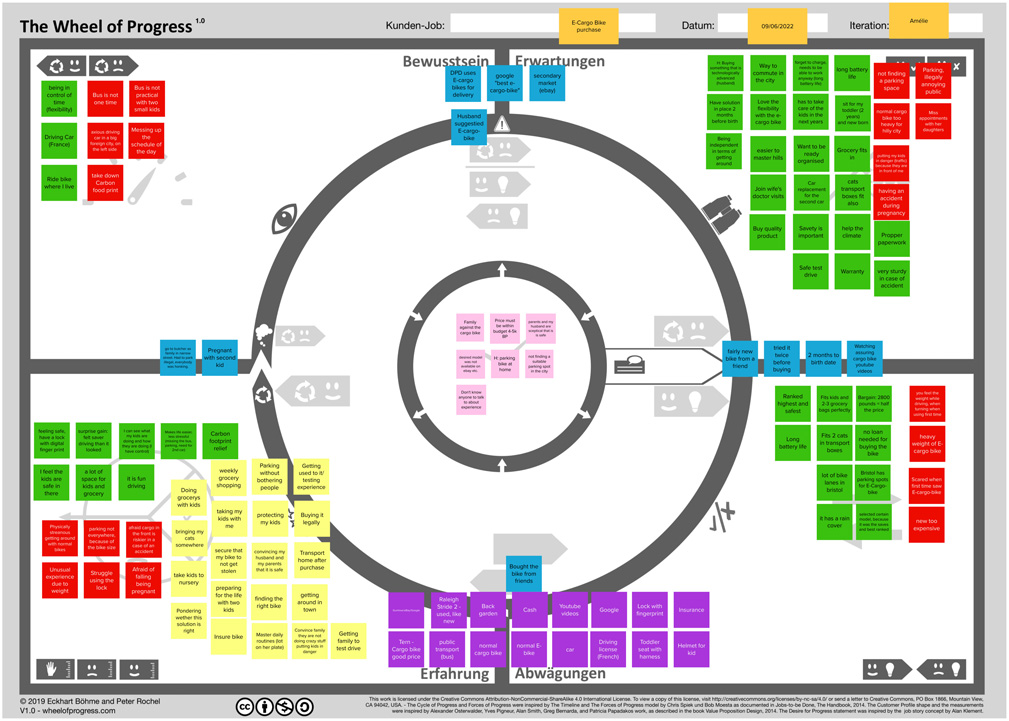
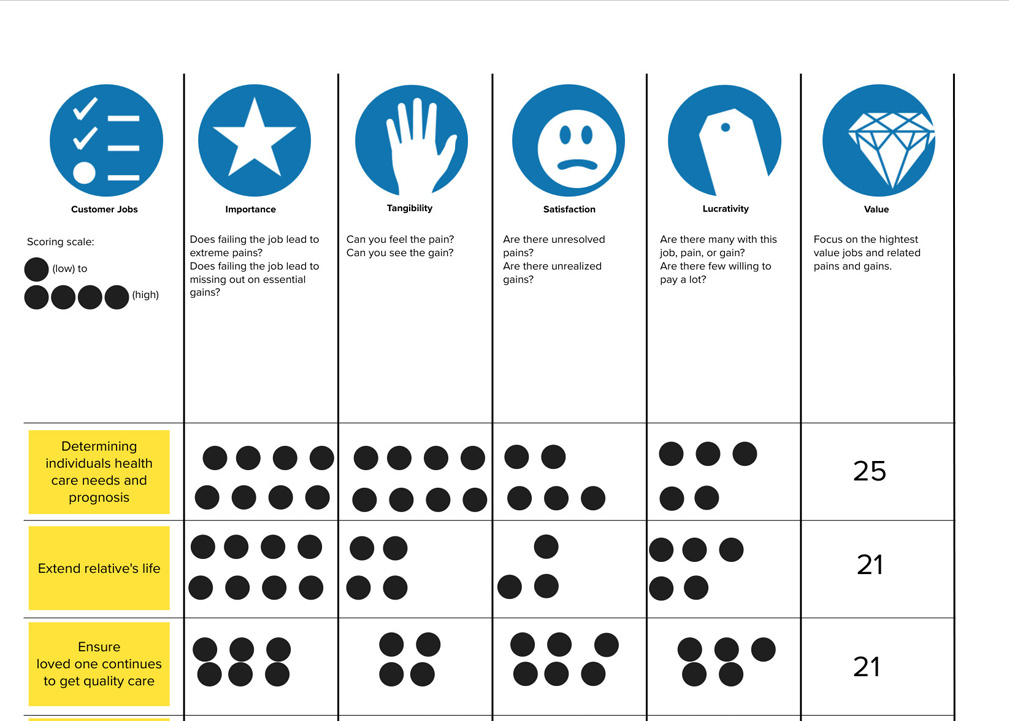
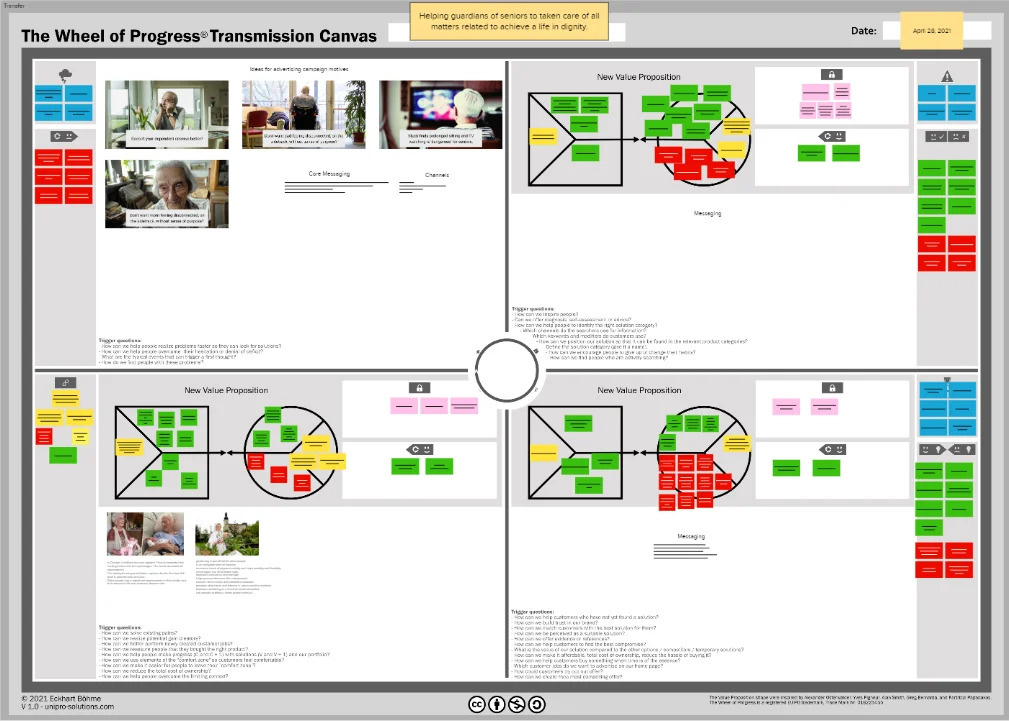
Adaptation of the Customer Progress Design Framework to client's terminology, customer segments, journey phases
-
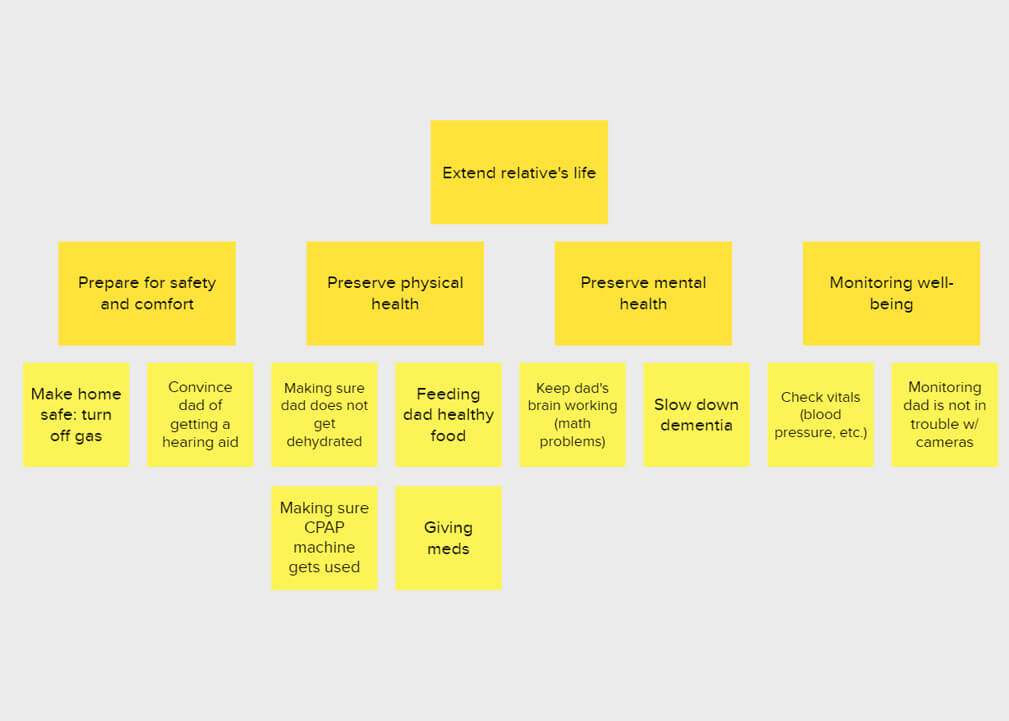
Classification of qualitative texts of 10 customer interviews (max. 40.000 words) into 12 elements, derivation of relations, formatting for graph-based knowledge database
-
Creation of nodes, relations, propperties in a Neo4J database
-
Technical review: Analysis of data quality, processing depth, degree of automation
Production Rollout
Multidata source-
Review of representative data sets up to 100.000 words.
-
QuickCheck by humans & AI
-
Data processing & relational analysis
-
Development of a scalable graph model
Managed Graph Service
Updates/support-
Data updates, up to 4.000 words
-
Creation of up to 3 new queries
-
Customer support
Exact pricing depends on scope, data sources, and SLAs.
Frequently Asked Questions
1) Audience
Who is this for?
Any company that needs to understand its customers more deeply can benefit from a customer knowledge graph.
In principle, that’s every company—because every business decision rests on how well you understand customer progress.
The impact is most dramatic for organizations already investing in qualitative research: instead of reports and decks that get forgotten,
their existing insights are turned into a living asset. For companies new to qualitative research, the graph offers a fast way
to build that capability and leapfrog into evidence-based, customer-centric decision-making.
2) The Why — Purpose & Value
Why should I build a central customer intelligence system?
Because all your qualitative customer knowledge is currently scattered across interview transcripts, reports, decks, and people’s heads.
A central customer intelligence system brings it together into one living, connected knowledge base. Instead of static insights that fade away,
you create a continuously growing asset that powers decisions across marketing, sales, product, and service with evidence—not assumptions.
The real outcome: your organization enters a new era of intelligent decision-making. With access to one central source of truth, you make
customer-centric choices that are coherent across teams and executed at speed. You can leverage the intelligence of the universe—LLMs—for
creative solution development, free from human bias yet grounded in your own proprietary data, the truth of customer realities.
This elevates your company’s capability to an entirely new level.
Why is building a customer knowledge graph an investment in our company’s future?
Every interview, insight, and observation compounds into a durable strategic asset. The graph scales with each project
and feedback loop, turning qualitative data into corporate memory so future teams don’t start from scratch. In a fast-moving
market, that continuity and compounding effect is one of the most valuable investments you can make.
3) The What — CPD & the Graph
What problem does Customer Progress Design (CPD) solve?
Traditional research fragments insights and hides causality. CPD organizes qualitative data into a connected model,
making it possible to see why customers act the way they do.
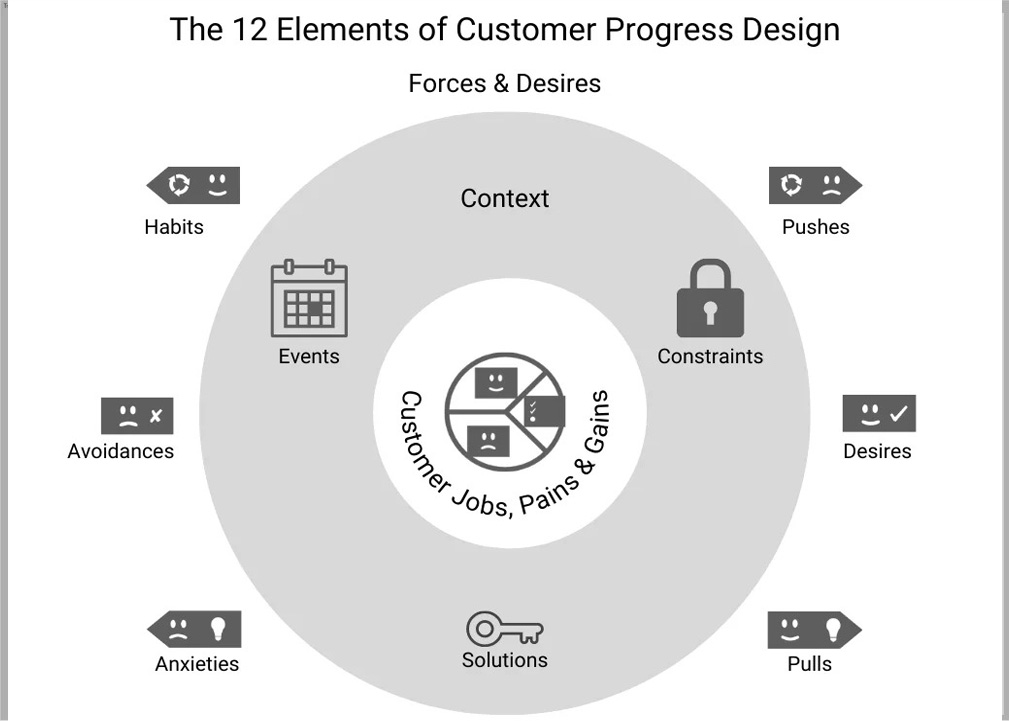
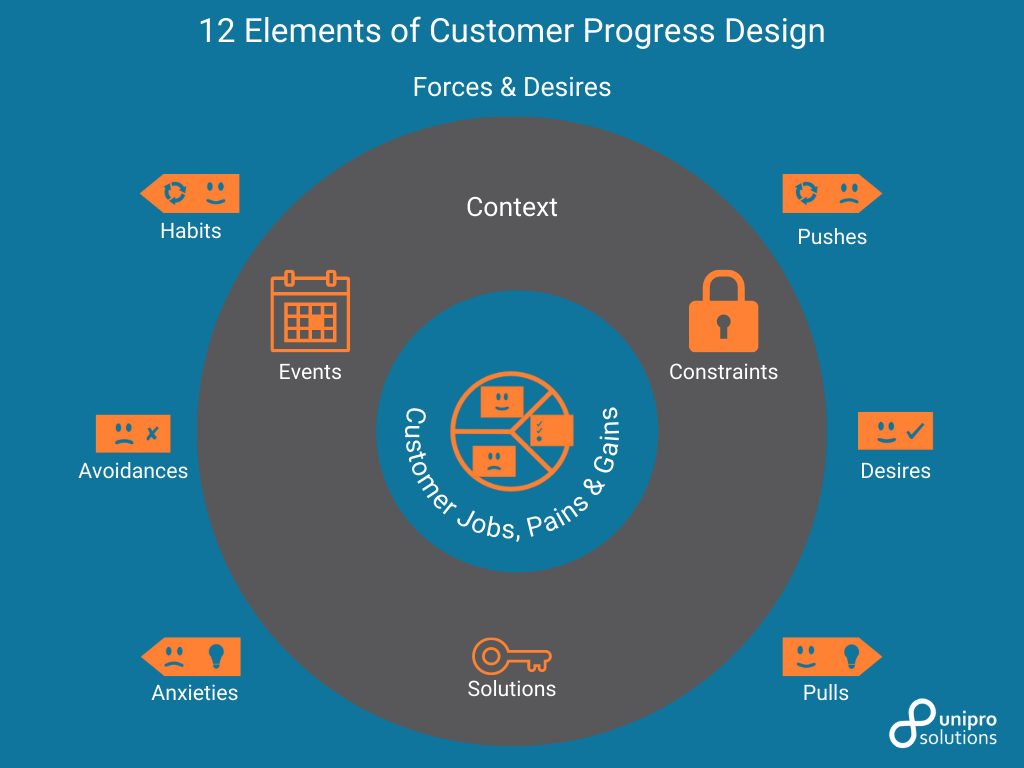
What are the 12 Elements of CPD and why do they matter?
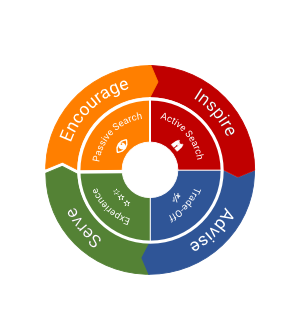
They capture the full customer journey—jobs, pains, gains, triggers, anxieties, habits, desired outcomes, and more.
Unlike personas or demographics, they reveal the real reasons behind customer behavior.
What are the benefits of combining CPD with a graph for journey analysis?
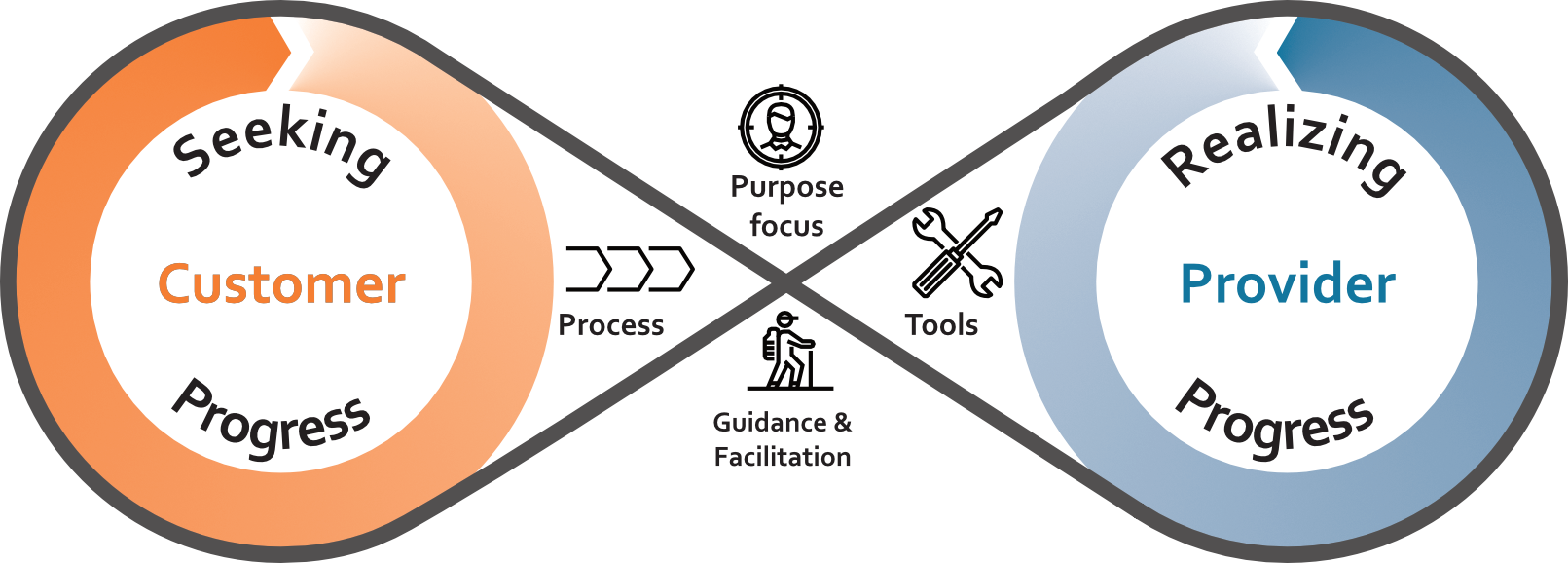
CPD provides the structured elements of progress, and the graph connects them into a living map. This makes the entire
journey transparent, reveals causalities, and highlights where customers get stuck or move forward.
4) The How — Practical Use & Access
How is the graph created?
We transform CPD-structured data into a graph model where each element becomes a node and connections are mapped.
Relationships and dependencies become visible and mathematically traceable.
What can I do with the data in a graph—and how can I access it?
Explore visually (e.g., Neo4j Bloom), ask natural-language questions translated to Cypher, or connect via APIs to analytics
and AI. Analyze causality, map journeys, detect patterns, and extract segment-specific insights for dashboards, research,
and automated prompt generation.
How do qualitative data in a graph compare to traditional methods?
| Traditional Qualitative Data | Data in a Knowledge Graph |
|---|---|
| Stored as transcripts, notes, or PPTs | Structured as interconnected entities |
| Hard to search, slow to analyze | Instantly queryable and analyzable |
| Isolated insights in silos | Single shared source of truth |
| Easy to lose context | Connections & causality preserved |
| Results depend on analyst’s interpretation | Transparent, reproducible, AI-ready |
5) The Impact — Time, Strategy & Outcomes
How much time and money can we save by using the graph?
Work that used to take weeks—synthesizing interviews, aligning stakeholders, building decks—can be done in minutes.
You save research budgets, reduce repetitive work, and free teams to focus on strategy and delivery.
How long does it take to create a strategy using the graph?
Once the data is in, strategy creation is radically faster. An LLM can generate a Cypher query in seconds, pull insights
from the graph, and feed them back for synthesis—turning weeks of effort into a single working session.
How do we turn the data into tangible outcomes?
The graph powers outputs: marketing plans, product roadmaps, sales playbooks, buying aids, and hyper-customized deliverables
like checklists and toolkits. Because the data is structured and connected, every output is traceable back to real customer
evidence.
Why use our own connected data graph instead of just LLMs or synthetic users?
Generic LLMs can generate ideas but aren’t grounded in your customers. A graph ensures every node reflects real voices,
contexts, and journeys—keeping strategies evidence-based. LLMs become more powerful when paired with your graph:
instead of hallucinating, they retrieve and combine authentic insights—always with reasoning you can inspect and outcomes
you can trace back to the original source data.
Will we still need all the other tools if we adopt a customer knowledge graph?
Short answer: Not all of them. The graph replaces many proxy tools and reduces others; some execution tools remain complementary.
- Customer Journey Mapping tools (e.g., Smaply, UXPressia, Miro templates) — Mostly replaced.
- Persona builders (e.g., HubSpot MakeMyPersona, Xtensio) — Replaced.
- VoC / NPS dashboards (e.g., Qualtrics, Medallia) — Reduced, not always removed.
- Innovation & ideation canvases (e.g., MURAL/Miro frameworks) — Reduced.
- Strategy/portfolio tools (e.g., Cascade, WorkBoard, Roadmunk, Aha!) — Complemented.
- BI dashboards (e.g., Power BI, Tableau, Looker) — Complemented.
- External research agencies — Significantly reduced.
Bottom line: Expect consolidation of licenses, fewer overlapping tools, and less spend on repackaging insights.
The knowledge graph becomes your single source of truth and the backbone for strategy, with a leaner set of execution tools on top.
Organizations we proudly served
Testimonials